Sanitary Fluid Handling Stainless Steel Compliance Basics





Why does sanitary fluid handling stainless steel matter so much in foodservice systems?
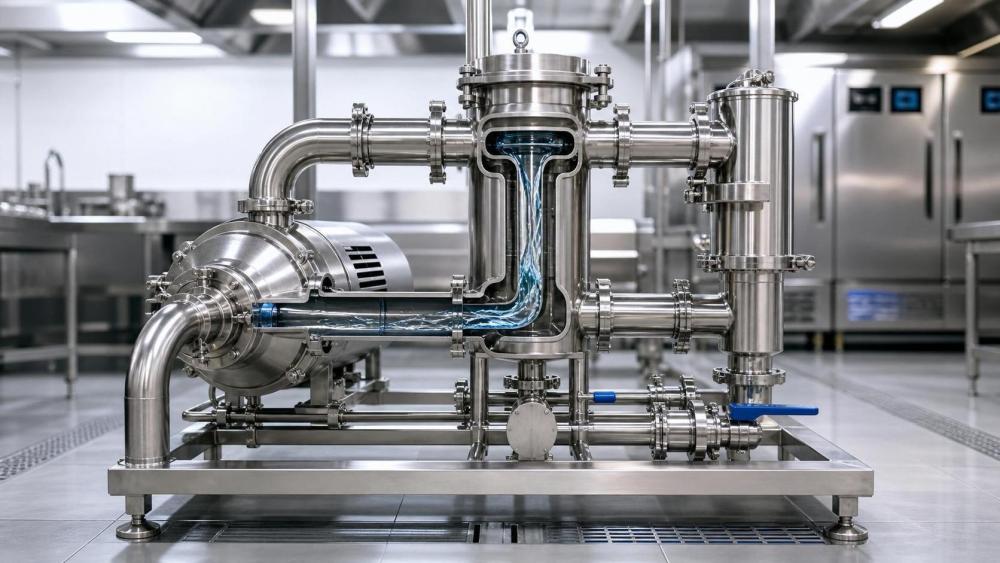
In commercial kitchens and retail equipment, stainless steel is not just a surface finish. It often forms the wetted path that carries water, product, chemicals, and rinse fluids.
That is why sanitary fluid handling stainless steel becomes a control point for hygiene, cleanability, corrosion resistance, and audit confidence.
The concern is practical. If the wrong grade, finish, weld, or fitting is used, residues can stay in place, corrosion can start early, and cleaning validation becomes harder.
This shows up across combi ovens, dishwashers, blast chillers, beverage circuits, CIP loops, retail refrigeration condensate paths, and hot water distribution.
CFRS frequently connects this topic with broader system performance. A sanitary fluid path affects food safety, uptime, maintenance intervals, and even energy use when scaling or fouling reduces efficiency.
So when people search for sanitary fluid handling stainless steel, they usually want more than a material definition. They want to know what passes inspection and what fails in real operation.
What does sanitary fluid handling stainless steel actually mean?
At a basic level, it means stainless steel components designed so fluids can move without creating contamination traps, corrosion points, or cleaning dead ends.
The word sanitary is doing a lot of work here. It does not mean simply “made of stainless.” It means the whole fluid-contact design supports effective cleaning and hygienic operation.
Typical features include smooth internal surfaces, controlled roughness, full-penetration welds, drainability, compatible gaskets, and fittings that avoid product hold-up.
In many foodservice and retail systems, the most common grades are 304 and 316 stainless steel. Both can perform well, but they are not interchangeable in every chemistry or wash regime.
Sanitary fluid handling stainless steel also sits inside a standards framework. Depending on the application, teams may review NSF/ANSI sanitation criteria, 3-A principles, welding quality, and cleanability expectations.
A useful way to read the term is this: material selection plus hygienic design plus process compatibility plus documented compliance.
A quick judgment table helps separate acceptable from risky design
Where is it most relevant in real equipment layouts?
The obvious applications are product pipelines, pumps, manifolds, valves, spray arms, and rinse circuits. But the relevance is broader than direct food contact.
For example, commercial dishwashers depend on hygienic water paths to keep wash and final rinse performance stable. Poor internal surfaces can hold scale, biofilm, or corrosion deposits.
In blast chilling and refrigerated retail systems, condensate and cleaning paths matter too. Standing moisture plus chloride residues can create hidden corrosion over time.
Combi ovens and smart cooking systems add another layer. Steam generation, water treatment, and detergent exposure can push a stainless steel selection beyond general kitchen assumptions.
Ghost kitchen MEP systems also bring sanitary fluid handling stainless steel into water supply loops, grease handling interfaces, and cleaning stations, where maintainability affects turnover speed.
In unmanned retail and vending, fluid handling may appear in beverage, cleaning, or condensate subsystems. These are easy to overlook until inspection findings or service issues appear.
A practical lesson is that hygienic risk often hides in supporting circuits, not just primary process lines.
304 or 316: which stainless steel is the safer choice?
This is one of the most common questions, and the answer depends on chemistry, not marketing language.
304 stainless steel is widely used in sanitary fluid handling stainless steel applications because it balances cost, fabrication, and corrosion resistance for general water and food contact duties.
316 becomes more attractive when chloride exposure is higher, cleaning chemicals are harsher, or wet conditions persist for long periods.
That matters in systems using chlorinated water, saline ingredients, strong detergents, or aggressive sanitizers. The upgrade can reduce pitting risk and extend service life.
Still, grade alone does not solve bad design. A poorly welded 316 component can fail hygiene expectations faster than a well-fabricated 304 assembly.
A better comparison framework is to ask three questions:
- What fluid actually contacts the metal, including cleaners and rinse water?
- How long does moisture remain on the surface after operation?
- Can the design be fully cleaned, drained, and inspected?
When those answers are clear, the 304 versus 316 decision becomes much easier to defend during design review or audit.
What compliance details are usually missed until inspection time?
The most common misses are not dramatic. They are small design details that create cleanability doubt or documentation gaps.
One example is assuming a stainless component is sanitary because the supplier says so, without checking finish, weld treatment, or certificate traceability.
Another issue is mixed-metal contact. If surrounding hardware, clamps, or fasteners are poorly matched, galvanic corrosion can undermine an otherwise sound stainless assembly.
Surface contamination after fabrication is also common. Free iron, heat tint, and rough rework areas can reduce corrosion resistance if passivation is skipped or poorly controlled.
Documentation matters too. Audit readiness often depends on being able to show material grade, surface treatment, sanitary design intent, and compatible cleaning procedures.
In CFRS-covered equipment categories, this is especially relevant where sanitation, heat, water, and repeated chemical exposure intersect.
Red flags worth checking before approval
- Dead legs, blind pockets, or low-flow branches in fluid paths
- Internal threads in product or rinse contact zones
- Elastomers without clear chemical and temperature compatibility
- Weld discoloration left untreated on wetted surfaces
- Unverified claims of NSF or sanitary compliance
How should sanitary fluid handling stainless steel be evaluated before purchase or retrofit?
A useful review starts with the process map, not the catalog. List the fluids, temperatures, cleaning chemistry, flow pattern, shutdown conditions, and inspection points.
Then compare each contact area against sanitary fluid handling stainless steel requirements. This turns a vague material discussion into a defendable engineering check.
In retrofit work, the hidden issue is often legacy geometry. Old branches, patched welds, and mixed fittings can limit cleanability even when the visible material looks acceptable.
It also helps to separate appearance from sanitary performance. A polished exterior says little about what happens inside a tube, valve body, or spray circuit.
Before signing off, many teams use a short decision checklist:
This review is usually cheaper than correcting a nonconforming installation after startup.
What is the most practical next step if the goal is lower risk?
Start by identifying every wetted path that affects food, water, steam, condensate, detergent, or final rinse performance. That map often reveals weak points quickly.
Next, rank those points by exposure severity: temperature, chloride level, cleaner strength, contact time, and cleaning difficulty. This is where sanitary fluid handling stainless steel decisions become specific.
Then review supplier documents against the actual service conditions, not generic stainless claims. Ask for grade confirmation, finish details, weld practice, and sanitation references.
In operations that depend on high throughput and repeatable hygiene, that discipline supports compliance and protects equipment ROI at the same time.
Sanitary fluid handling stainless steel is basic only on paper. In working systems, it is a daily reliability issue. The strongest decisions come from matching material, design, cleaning method, and documentation as one package.
A sensible next move is to build a short internal standard for grade selection, sanitary fittings, weld acceptance, passivation, and cleaning verification before the next project or retrofit review.
Related News
- 00
0000-00
How to select sanitary fluid handling systems for hygienic food processing - 00
0000-00
What kitchen fire safety compliance requires from commercial kitchens - 00
0000-00
How to check whether refrigeration equipment meets UL standards - 00
0000-00
How to check whether your food safety systems compliance is audit-ready - 00
0000-00
China Tightens Export Checks on Foodservice Equipment Bound for Western Markets
Dr. Elias Vance
Weekly Insights
Stay ahead with our curated technology reports delivered every Monday.