Restaurant Sanitation Standards That Trigger Violations





Why Sanitation Violations Start Before the Inspection
Restaurant sanitation failures rarely begin when an inspector arrives. They usually begin earlier, in routines that look acceptable until they are measured against actual compliance standards.
That is why sanitation standards restaurants must follow are not just regulatory language. They are operating rules that shape food safety, equipment reliability, labor discipline, and brand trust.
Across chain kitchens, hotels, central production sites, ghost kitchens, and retail foodservice, repeat violations often point to the same weaknesses: poor temperature control, incomplete cleaning, unsafe storage, and weak verification.
In practice, the issue is broader than housekeeping. It reaches refrigeration performance, dishwasher sanitizing results, airflow near food zones, drain design, and the way staff move through the kitchen.
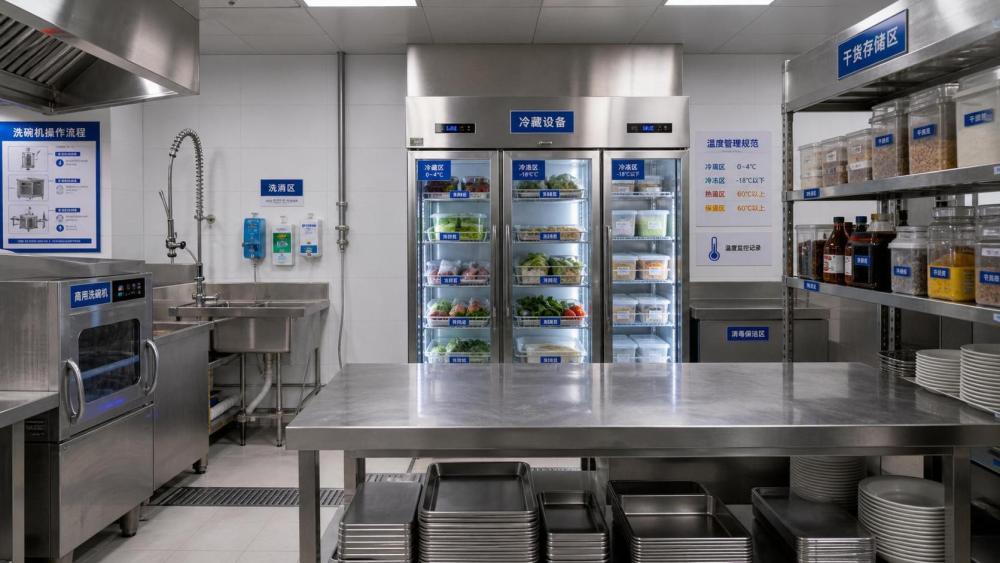
A citation often reveals a pattern, not a single mistake. Understanding which restaurant sanitation standards trigger violations helps operations identify root causes before those patterns become enforcement problems.
What Sanitation Standards Restaurants Are Really Measuring
Most sanitation standards restaurants face are designed to answer one practical question: can this operation consistently prevent contamination?
That question is tested through observable controls. Inspectors review food contact surfaces, time and temperature records, warewashing results, employee hygiene, storage separation, pest risks, and facility conditions.
The standard is not perfection. The standard is repeatable control under real operating pressure.
This is why equipment matters so much. A commercial dishwasher that cannot hold proper final rinse conditions, or a refrigerator with unstable air distribution, can directly undermine sanitation compliance.
Platforms such as CFRS track this connection closely because sanitation is no longer separate from kitchen technology. Smart cooking systems, blast chillers, dishmachines, and retail refrigeration all influence whether standards are met in daily use.
The Violations Seen Most Often
Some sanitation failures appear in nearly every foodservice format. They persist because they sit between human behavior and system design.
Time and temperature breakdowns
Cold holding above safe limits is one of the most common triggers. So is improper cooling of cooked food, especially when batch volume exceeds equipment capacity.
This matters in commissaries, ghost kitchens, and high-output restaurants. If blast chilling curves are poorly managed, food may remain too long in the danger zone.
Surface sanitation failures
Food contact surfaces may look clean but still fail due to residue, biofilm, or poor sanitizer concentration. Irregular cleaning of slicers, prep tables, probes, and door gaskets is a frequent problem.
Warewashing deficiencies
High-volume dishrooms often create hidden risk. Inadequate wash pressure, poor rack loading, low rinse temperature, and chemical imbalance can all break sanitation standards restaurants are expected to achieve.
Cross-contamination in storage and flow
Raw product stored above ready-to-eat items, poorly separated allergen tools, and shared handling zones often trigger enforcement. These failures are usually procedural, but layout limitations make them worse.
Facility sanitation and non-food-contact neglect
Floors, drains, exhaust systems, condensate management, and refuse areas may seem secondary. Yet many inspections identify them as evidence of weak sanitation discipline across the whole operation.
Why Violations Often Point to Equipment and Workflow
It is easy to blame sanitation failures on training alone. In reality, recurring violations often signal a mismatch between throughput, equipment capability, and workflow design.
A refrigerator may be technically functional but unable to recover quickly after repeated door openings. A combi oven may support consistency, yet surrounding holding procedures still create exposure.
The same applies to dishwashing systems. Flight-type and rack conveyor machines can sanitize at scale, but only when water jet dynamics, loading patterns, and final rinse performance are verified.
In retail foodservice and grab-and-go formats, sanitation standards restaurants rely on also intersect with display refrigeration, air curtain performance, and consumer-facing handling risks.
That is why sanitation review should include both procedures and hardware conditions. A clean policy does not compensate for poor airflow, dead corners, inaccessible surfaces, or weak drainage design.
Where Risk Changes by Operating Format
Not every kitchen fails in the same way. The sanitation standards restaurants must meet stay consistent, but the pressure points differ by format.
This format-based view helps explain why generic sanitation checklists often fail. Risk control must reflect actual production, service speed, and equipment loading patterns.
What Strong Compliance Looks Like in Daily Practice
Strong sanitation performance is visible in routines, not slogans. It shows up in small controls that prevent larger failures.
- Temperature logs are verified against equipment reality, not filled in after the shift.
- Cleaning schedules identify difficult surfaces, gaskets, drains, probes, and under-equipment zones.
- Dishmachine checks include rinse temperature, chemical levels, pressure, and soil removal performance.
- Receiving, storage, prep, cook, cool, and holding steps follow a clear product flow.
- Corrective actions are defined before failure happens, including when to discard, rewash, or service equipment.
This is where sanitation standards restaurants depend on become operational. The standards are translated into measurable habits, supported by the right equipment and documented response paths.
How to Review a Site Before Violations Repeat
When repeat findings appear, a deeper review is usually needed. Surface correction is rarely enough.
Start with failure points, not the form
Map where sanitation breaks under peak load. Look at cooling windows, warewashing backlogs, prep congestion, and refrigerated holding during busy periods.
Check whether the equipment supports the standard
Sanitation standards restaurants are judged by may exceed what aging or poorly selected equipment can deliver. Recovery rate, cleanability, sensor accuracy, and service access all matter.
Review invisible infrastructure
Drainage, ventilation, grease management, condensate control, and hood hygiene often shape contamination risk indirectly. CFRS coverage frequently highlights these support systems because they affect compliance more than many teams expect.
Use sanitation data as an operating indicator
Recurring sanitation findings can signal deeper operational stress. They may point to labor gaps, poor layout, overproduction, or equipment chosen without regard to real throughput.
A More Useful Next Step
The most effective response is not to prepare for the next inspection. It is to build a clearer link between sanitation rules, equipment performance, and daily workflow.
Review the sanitation standards restaurants are currently measured against, then compare them with actual holding times, cooling capacity, warewashing output, and surface access for cleaning.
From there, the priorities usually become clearer. Some sites need stronger verification. Others need different process sequencing. Some need equipment upgrades that improve cleanability, temperature stability, or sanitizing consistency.
A practical evaluation framework should connect compliance findings with refrigeration, dishwashing, cooking, exhaust, and space planning decisions. That approach reduces repeat violations and creates a more stable operating baseline.
For any operation assessing sanitation risk, the next useful move is to audit where standards fail under real production conditions, then judge whether procedures, infrastructure, and equipment are truly aligned.
Related News
- 00
0000-00
How to select sanitary fluid handling systems for hygienic food processing - 00
0000-00
What kitchen fire safety compliance requires from commercial kitchens - 00
0000-00
How to check whether refrigeration equipment meets UL standards - 00
0000-00
How to check whether your food safety systems compliance is audit-ready - 00
0000-00
China Tightens Export Checks on Foodservice Equipment Bound for Western Markets
Dr. Elias Vance
Weekly Insights
Stay ahead with our curated technology reports delivered every Monday.